The Life and Miracles of the Holy Prophet Elijah
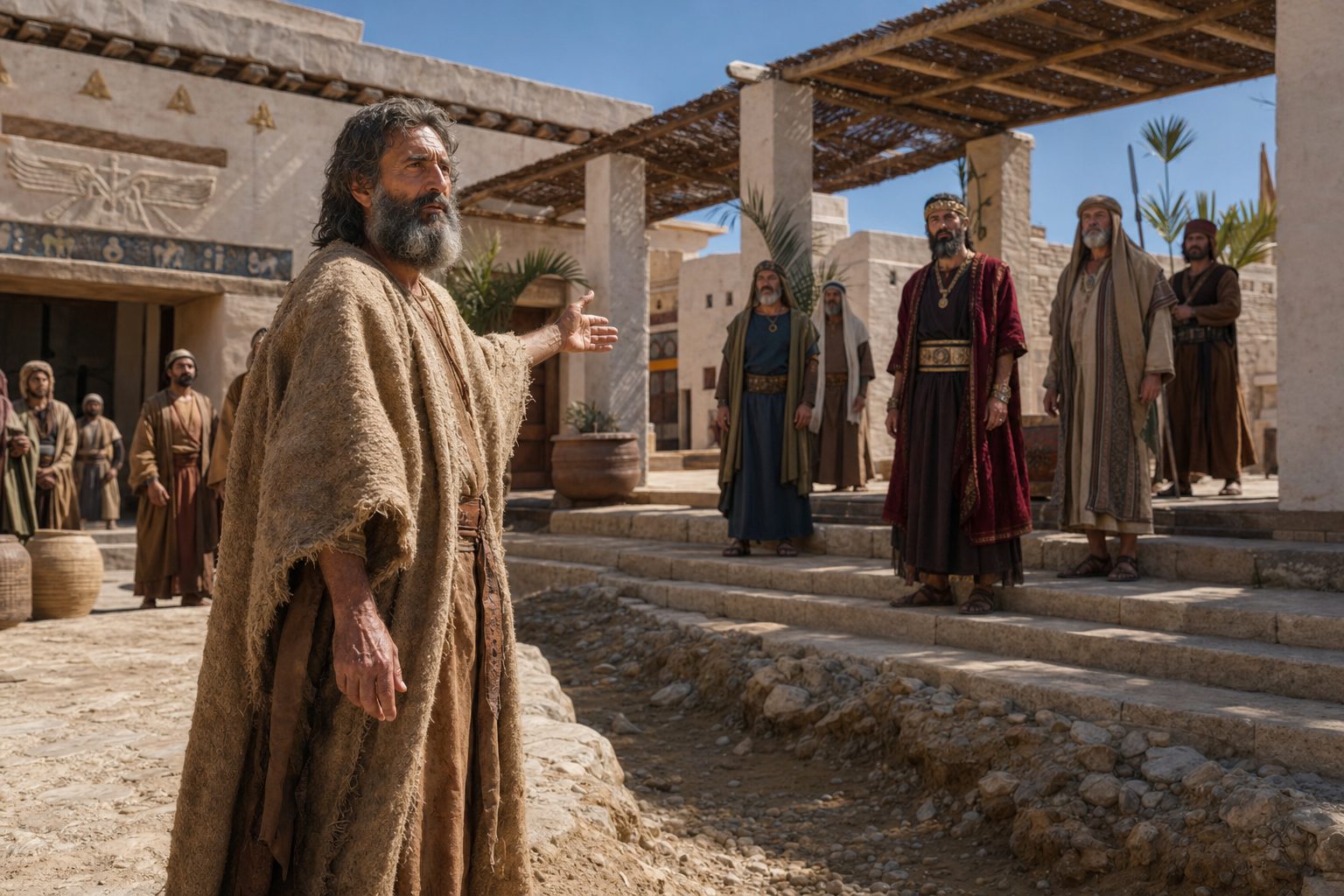
The memory of July 20
Beginning with the life of St. Elijah, the seer and glorious zealot, the wicked king, the accuser, the apostate punisher, the false prophet, the executioner, the strange miracle worker, obeyed by the elements, obeyed by heaven, the great pleaser of God, still in the flesh and to come to earth before the second coming of Christ, <unk> for clearer and stronger proof.
We shall give a brief account of the events that preceded him.
The ancient chosen people of God, from the twelve sons of Israel multiplied into twelve tribes, called the tribes, formed one kingdom, ruled by one leader in undivided and unilateral authority, beginning with Moses and Joshua and the other judges of Israel to kings David and Solomon.
The land God gave to Abraham and his descendants was the most suitable place for God's people. It was surrounded on the north by the mountains of Lebanon, on the east by the Syrian-Arabian desert, on the south by the rocky Arabian desert, and on the west by the Mediterranean Sea.
(Ezekiel 5:5) The people of God could communicate with all the powerful, educated peoples of antiquity and communicate God's revelations to them. When the time came to enlighten the peoples with the light of divine teaching, the preachers from Palestine had open and close ways to all the peoples of the world.]
And it came to pass after the death of Solomon, that Rehoboam his son reigned in his stead; and he departed from the counsel of the old men, according to his youth, and he listened to the young men who were his fellows, and he weighed down the burdens of his servants, and made their service heavy, and sent them into captivity; and the ten tribes departed from him, and made Jeroboam king over them.
Jeroboam had previously been a slave of Solomon, and Solomon tried to kill him for some of his wine, but Jeroboam fled to Egypt, where he remained until Solomon's death.
And there was a great revolt in the land of Israel against Solomon, because of the heaviness of the tribute; and Jeroboam was the head of the people; and Solomon sent to kill Jeroboam, and he fled into Egypt.
Rehoboam, the son of Solomon, reigned in Jerusalem over only two tribes <unk> Judah and Benjamin; and Jeroboam, the slave of Solomon, reigned over the ten tribes of Israel, residing in the city of Shechem [Sichem or Shechem was in the middle of the western part of Palestine, which later formed Samaria] which he rebuilt and restored, for up to that time it had been in ruins.
The two tribes that remained loyal to Solomon's son were called the kingdom of Judah; the ten tribes that came to Solomon's servant formed the kingdom of Israel.
And the tribes of Israel were divided into two kingdoms; and they sought one God, the maker of heaven and earth, for there was no house besides the house that Solomon had built in Jerusalem, and there were no priests besides the priestly order.
And it came to pass when Jeroboam king of Israel saw [it], that he said, If this people go up to Jerusalem to worship God, then they will turn again to their first king, to the son of Solomon, and they will kill me.
And he said, We will not let them go out of Jerusalem, until they have forsaken God; for he knew the children of Israel, that they were a people that were ready to go after idols, and to do every unclean thing; and Jeroboam devised this device to make them forsaken.
(Ex. 32) After gathering all the people of Israel and pointing to the two calves, Jeroboam said: "Israel, here are your gods, who brought you up out of the land of Egypt.
He set up the calves in various places, one in Bethel and the other in Dan [the city of Bethel in the southern part of Samaria, north of Jerusalem, and the city of Dan in the northern part of Galilee], built magnificent temples for them, set up festivals and many sacrifices in their honor, and appointed priests to them; and he even performed the duties of the priesthood.
To further tempt the sin-loving people, Jeroboam ordered that all kinds of wrongdoing should be done at the golden calf-shaped idols on the days of their festivals.
So the wicked king, for the sake of a temporary kingdom, turned away from God, and all the ten tribes of Israel turned away from him.
But the Lord, who is gracious and merciful, desiring to turn his people back to him, sent his holy prophets among them to warn them,
According to reliable accounts, the homeland of God's holy prophet Elijah was the land of Gilead, on the other side of the Jordan [in the land of Transjordan, in the eastern half of Palestine], bordering Arabia; and the city in which he was born was called Peshvit, from which Elijah was nicknamed the Peshvite [The city of Peshvit or Peshva was in the eastern part of the land of Gilead, stretching from Mount Hermon to the river Arnon, <unk> east of the Jordan, near the mountains of Gilead.]
And it came to pass, when she was in childbirth, that Sheba the seer saw a man speaking to a child, and he put fire in his mouth, and fed him.
Be not afraid of the vision of thy son, but know that the child shall be a vessel of grace of Jehovah, and his word shall be as a burning fire, strong and effective, and his jealousy for Jehovah shall be great, and his life shall be pleasing to Jehovah, and he shall judge Israel with the sword and with the fire.
Elijah, as a priestly man, received his education and training among the priests; from a very young age, having given himself to God, he loved the virgin purity in which he dwelt, like an angel of God, blameless before God, pure in soul and body.
(Isaiah, chapter 6) "Holy, holy, holy is Jehovah of armies; the whole earth is full of his glory".] Elijah was loved by God, for God loves those who love him.
Elijah was pleased to have a pleasant conversation with God, and because of his angelic life, he acquired great boldness before Him.
When I heard and saw the wickedness that is done in unfaithful Israel, the wickedness of the kings, and the unrighteousness of the judges, and the unrighteousness of the elders, and the people that serve abominable idols, and that defile themselves in every uncleanness of spirit and flesh, and that fear not God, and that sacrifice their sons and their daughters unto demons,
And the prophet of God was grieved at these things, and was grieved because of the slaughter of so many, and because of the oppression of the righteous, and because of the blasphemy of the ungodly, and was exceedingly grieved; and he was filled with jealousy for the glory of God.
But since God does not demand repentance from sinful men, and their hearts are hardened, the prophet Elijah prayed for God's glory and for the salvation of the people, asking God to punish them temporarily, even if only by such means.
But at the same time, Elijah knew that the Lord was slow to punish because of his human love and long-suffering, and in his great jealousy for God, he dared to ask God to command him, Elijah, to punish the wrongdoers, in the thought that they might repent when they were punished by man.
And Elijah prayed continually unto the Lord until he had received the request of the Lord, the Lord being gracious, and loving, and not willing to grieve his beloved servant, the son of his servant, who had not transgressed even the smallest of his commandments; but because Elijah obeyed him in all things, and was not angry with him in anything, he hearkened unto the supplications and prayers of his faithful servant, and grieved him not for their failure.
At that time Israel was ruled by the lawless king Ahab, whose capital city was Samaria (this city was already the third capital of the kingdom of Israel: the first capital was Shechem, in the tribe of Ephraim, the second <unk> Perez, in the tribe of Manasseh, the third <unk> Samaria, again in the tribe of Ephraim).
And Jezebel, a pagan woman, brought the image of Baal, the god of the Sidonians, into her own land, and built him an altar in Samaria, and worshipped Baal, and made all Israel worship him.
And he proceeded to do more wickedly in his kingdom than all the kings that were before him in Israel, to provoke Jehovah the God of Israel to anger. And Elijah the prophet, a jealous man of God, came to him, and rebuked him, because he had forsaken the God of Israel, and had gone after the graven images, and had made a waste all his people with him.
And when the holy man saw that the king hearkened not to his counsels, the holy man added words to the matter, and pronounced judgment upon the king, and upon his adversaries, saying,
As Jehovah the God of hosts liveth, the God of Israel, before whom I stand, if there be dew or rain in the land in these years, it shall not be except at my word.
And Elijah went up from Ahab's presence, and the heavens were shut up, and there was no dew, nor rain on the earth; and there was no increase in the harvest, and there was a famine; for when one king sinned, there came wrath upon all his people.
God's prophet Elijah, on the other hand, expected that when punished, King Ahab of Israel would come to his senses, turn to God in repentance, and, along with him, turn his corrupt people from the way of truth.
But when Elijah saw that Ahab was hardening his heart, not only that he would not turn from his wickedness, but that he would sink deeper into the pit of his wickedness, persecuting and even killing those who were pleasing to his God in his life, he prolonged the punishment for a second and a third year, to fulfill what was said to Israel by the first seer of the Lord, the holy prophet Moses:
<unk> The heavens above you will be of copper and the earth beneath you of iron (Deut. 28:23); because when the heavens were closed, the earth had no moisture [in Palestine, as in other hot countries, rain falls only in autumn and spring, but dew is very abundant.
And the heat of the sun, and the heat of the heat of the day, made all the trees and the flowers and the herb wither, and the fruit of the land was withered, and the orchards and the fields were desolate, and there was no ploughman or sower in them; and the fountains of the waters were dried up, and the streams and the brooks were dried up, and the waters of the great rivers were diminished, and the land was desolate and dry, and the men and the cattle and the fowl of the heavens were cut off.
And it came to pass, when a house was burned in the city, that the fire spread to the houses that were beside it, and the whole world was troubled, because of the jealousy of Elijah the prophet.
For Jehovah is gracious and full of compassion, and in the abundance of his goodness he hath said that he would send rain upon the earth, to accomplish the word of Elijah, that the words of the prophet might not be false, when he said, As Jehovah liveth, there shall be no dew nor rain upon the earth, except by my word.
And he was so moved with jealousy for God, that he spared not himself, because he knew that when the food supply of the land was exhausted, he, and all men, should suffer famine. But he ignored this, for he would rather die of hunger than have mercy on the unrepentant sinners who were enemies of God.
"Go eastward and hide yourself by the torrent of Horeb [in Syria, near Damascus], which is opposite the Jordan, and drink from it, and I have commanded the ravens to feed you there". - 3 Ki. 17:3-4.
The crow has a peculiar quality in comparison with other birds (Ps. 146:9): they are very voracious and have no feeling of pity even for their chicks, for the crow only brings out its chicks, leaves them in the nest, flies to another place and condemns the chicks to die of hunger.
And it came to pass, when the ravens came to the prophet every day, according to the commandment of God, and brought him food, bread in the morning, and meat in the evening, that the conscience of Elijah, the voice of God within the man, called to his heart,
Behold, the ravens, wild by nature, ravenous, ravenous, not loving their young, how they take care of your food; they themselves are hungry, and they bring you food.
It is time to have mercy on the afflicted creature and to send rain to it, so that you too may not die of thirst. But the jealous man of God strengthened himself. Instead, he prayed to God that it would not rain until the punishment had been inflicted on the unpunished and all God's enemies had been destroyed from the earth.
And again the LORD wisely moved his servant to mercy, and sent him to Zarephath of Sidon, which was outside the dominion of the king of Israel, to a poor widow, that he might consider the affliction which he had brought upon the rich and married, and upon the poor widows, which were not only in the time of famine, but also in the years of the harvest of bread and of all the fruits of the earth.
Abundant people often do not have enough food for the day.
And he came to the gate of the city, and behold, there was a widow bearing two sheaves of wood, and she had in her hand a handful of fine flour, and a little oil in a cruse. And he asked her for a morsel of bread.
The widow told him of her recent extreme poverty and said that she wanted to use her last meal to make one last meal for herself and her son before they starved to death.
The man of God could have had pity on all the poor widows who were suffering from hunger; but the great jealousy for God overcame everything, and he showed no mercy to the perishing creature, wishing to glorify the Creator and show His almighty power to the whole universe.
By faith Elijah raised up the house of a widow, and he ate until the famine was over. The prophet prayed and raised her dead son, as it is written in the Scriptures.
There is a story about this resurrected widow's son, that his name was Jonah, that it was he who, when he came of age, was like a prophetic gift, was sent to Nineveh to preach repentance; and being swallowed up in the sea by a whale and thrown out by it after three days, he foreshadowed the three-day resurrection of Christ, as the prophetic book and his life [September 22] detail.
And it came to pass after three years, when the famine was past, that Jehovah saw that the land was desolated by the famine, and he was moved with compassion toward Elijah his servant, and said, Go, shew thyself to Ahab, that I may shew myself to Ahab, and that I may send rain upon the dry land, and make it fruitful according to thy word.
And the prophet arose, and went from Zarephath of Sidon to Samaria. And Obadiah was over the house of Ahab, and he feared God. And he hid a hundred men of the prophets of Jehovah, and gave them bread and water, and put them in a cave fifty by fifty, when Jezebel slew them.
And he went out to meet him, and bowed himself to the ground before him, and said, Behold, Ahab has sought me in all his kingdom. And he said, Go, say to thy lord, Behold, I am Elijah.
And Obadiah refused, and said, Behold, when I go from thee, the Spirit of Jehovah will carry thee to another land, and I will be false to my lord; and he will be wroth with me, and will slay me. And Elijah said, As Jehovah of hosts liveth, before whom I stand, I will certainly appear to him this day.
And Obadiah returned, and told the king. And Ahab made haste to meet the man of God. And when he saw him, the anger of his heart was kindled against the prophet, and he could not restrain himself from speaking evil words to him. And he said to Elijah, Is it thou, thou troubler of Israel? And the man of God answered boldly, I have not troubled Israel, but thou and thy father's house, in that ye have forsaken Jehovah your God, and gone after the abomination of Baal.
Then the prophet of God, with the power of divine help in him, began to give the king his authority, saying: "'Go at once and assemble yourselves to me on Mount Carmel [Mount Carmel is northwest of Samaria, near the Mediterranean Sea].
And Elijah chose this mountain for the assembly, because it was the chief place of Baal's worship in the kingdom of Israel.] all the ten tribes of Israel, bring forth the four hundred and fifty wicked prophets, who serve other idols on the high mountains and in the brooks [Along with Baal, Ashtaroth or Asherah was worshipped.
She was depicted with a woman's head, decorated with a moon sickle or two horns. Baal worship was performed on high places, and Ashtaroth in the valleys, in green oaks (brushes).
Baal, besides his significance as the god of the sun, Baal-zebul, the god of flies, because the Philistines, who lived on the low coast of the sea and suffered from a multitude of flies and other insects, prayed to him to get rid of flies.
The children of Israel were easily entangled in idolatry, because the service of the true God required virtue, prayer, repentance for sins, fasting, and the service of the idols was accompanied by dancing, feasting, drinking, and other sensual pleasures.
And the king sent messengers through all Israel, and gathered together a great multitude, and all the wicked men, and the prophets, and all the priests, to mount Carmel. And Elijah the man of God, a jealous man, stood before the king and before all the people, and said,
If Jehovah, who brought you up out of the land of Egypt with a strong hand, is God, why then have you not followed him? If Baal is your god, go after him. And the people were silent, and could not answer him; for the people were in a daze.
And I am left, I only, a prophet of Jehovah in Israel; but ye have slain the prophets, and the prophets of Baal are many here. And now let us take two bullocks, and let us sacrifice one bullock for me, and one bullock for the priests of Baal; but let no fire come down from heaven upon the sacrifice of any one that will devour it.
And it came to pass when the calf was brought in the midst of the congregation, that Elijah the priest said to the wicked prophets of Baal, Choose for yourselves one calf, and prepare the first; for ye are many, and I am the last; and put the calf on the wood, but put no fire upon it, and call upon Baal your god, that he may send down fire from heaven and consume your sacrifice.
And they cast lots, and took the bullock, and cut it in pieces, and put them on the altar upon the wood; and they called on the name of Baal, that he might kindle fire upon the burnt-offering; and they called on his name from morning until noon, saying, Baal, answer us, answer us! But there was no voice, and no answering. And they ran round about the altar, and laughed at them at noon.
"Cry out louder", he said, "so that your god may hear you; he must not be at liberty now: or he is busy with something, or conversing with someone, or feasting, or sleeping [the Jews used to sleep in the hottest part of the day, from 10 or 11 o'clock in the morning to 3 o'clock in the afternoon]; cry out as loud as possible to wake him up.
And they called upon the name of Baal with a loud voice, and cut themselves with the knives, according to their custom; and they beat themselves with whips, until the evening was come. And Elijah the Peshbite said to them, Be still, for the time of my sacrifice is come. And the servants of Baal ceased. And Elijah said to all the people, Come near to me. And all the people came near to him.
And he took twelve stones, according to the tribes of Israel, and built an altar to Jehovah, and laid the wood upon the altar, and cut the bullock in pieces, and laid them upon the wood, and dug a trench round about the altar. And he said to the people, Take four buckets of water, and pour it upon the sacrifice, and upon the wood. And he said, Do it again. And he said, Do it again. And he said, Do it a third time, and they did it. And they poured it all round about the altar, and the trench was filled with water.
And Elijah cried to God, and lifted up his eyes to heaven, and said, Jehovah, God of Abraham, Isaac, and Jacob, hear now thy servant, and let fire come down from the heavens upon the oblation; that all this people may know that thou art God in Israel, and that I, thy servant, have offered this oblation to thee. Hear me, Jehovah, and answer me with fire, that the heart of this people may be converted.
And the fire of Jehovah came down from the heavens, and devoured the burnt-offering, and the wood, and the stones, and the ashes; and the water that was in the trench it devoured. And all the people saw it, and fell on their faces.
And Elijah said to all the people, Seize the prophets of Baal, that not one of them escape.
The people obeyed, and Elijah led them down to the torrent of Kishon, which flows into the Great Sea [the torrent of Kishon flowed near Mount Carmel, north of it; it flowed into the Mediterranean Sea, which was called the "Great" Sea].
And Elijah said to Ahab, Eat, and drink, and set the horses in the chariot, and go; for there is a heavy rain, and it shall come upon the land.
And he bowed his face between his knees, and prayed to his God, and the heavens were opened, and there came down a mighty downpour, and it watered the land, and it gave drink to the thirsty. And he confessed his iniquity, and went on his way to Samaria; and Elijah the priest girded on his loins, and walked before him, rejoicing in the glory of Jehovah his God.
And the wicked Queen Jezebel, Ahab's wife, when she heard of it, was wroth with Elijah, because he had slain her shameless prophets, and swore by her gods, and sent to tell him, that at the same hour that Elijah slew the prophets of Baal, she would slay him to-morrow.
And he went a day's journey in the wilderness, and sat down under a terebinth to rest; and he was grieved, and asked God for his own death, and said, It is enough for me, O Lord, that I am as yet in the land; take now my soul: am I not better than my fathers?
The prophet said this, not because of grief over his persecution, but as a zealous man for God, who could not bear the evil of man, the reproach of God, and the reproach of the holy name of Jehovah. It was better for him to die than to hear and see the wicked despising and rejecting his God.
And he arose, and behold, by his head was a warm vessel and a cruse of water; and he rose up and ate and drank, and lay down again. And the Angel of Jehovah touched him the second time, and said, Arise, eat and drink; for the journey is too great for thee.
And he arose, and ate and drank again, and went in the strength of that food forty days and forty nights to the mountain of God, unto Horeb; and he abode in a cave; and Jehovah Elohim appeared to him in the cool breeze.
When the Lord approached him, the terrible signs of his appearance preceded him: first, there was a great windstorm, breaking up the mountains and breaking up the rocks, then there was fire, but the Lord was not in the fire; after the fire a gust of light wind, and there was the Lord [Elijah needed to destroy all the wicked people].
And it came to pass, when Elijah heard of the passing of the Lord, that he covered his face with his mantle, and came out of the cave, and stood by it; and there was a voice of the Lord saying unto him, What doest thou here, Elijah?
I have been very jealous for thee, Jehovah of hosts; for the children of Israel have forsaken thy covenant, and have thrown down thy altars, and have slain thy prophets with the sword, and I alone am left, and they seek my life to take it away.
At the same time, Jehovah told Elijah that the coming destruction of Ahab and Jezebel and their entire house was imminent, and he instructed Elijah to appoint a good man to be king over Israel.
And the name of Jehu, that he should destroy all the house of Ahab, and that he should anoint Elisha to be a prophet. And the Lord comforted his servant, and departed from him.
And the man of God departed from Horeb by the word of Jehovah, and found Elisha the son of Shephathah in the way, who was plowing with twelve yoke of oxen; and he laid his mantle upon him, and Elijah the holy man spoke to him from the mouth of Jehovah, and called him a prophet, and said to him, Come with me. And he said to Elijah, Let me, I pray thee, kiss my father and my mother a little, and I will follow thee.
And when he came to his house, he slaughtered a pair of oxen, and made a feast for his neighbors and his kinsmen, and said farewell to his father and his mother, and went after Elijah, and was his servant and his disciple.
And there was a man of Israel, whose name was Naboth, who had a vineyard of Ahab king of Samaria. And Ahab said to Naboth, Give me thy vineyard, that I may have it for a garden; for it is by the side of my palace, and I will give thee another, and it is better than it; and if it is not good in thine eyes, I will give thee money for it.
And Ahab went to his house mournful and vexed because of the answer of Naboth, and would not eat bread; and when Jezebel saw that he was mournful, she laughed at him, saying,
Is it so with thee, O king of Israel, that thou canst not do thy will to one man? And now let thy countenance be turned, and eat bread, and let thy soul rest; I will give thee the vineyard of Naboth.
And she wrote in the king's name to the elders of Israel, and sealed with the king's seal, to accuse Naboth falsely, saying, Thou hast cursed God and the king; and they brought false witnesses, and stoned him with stones outside the city, to slay him.
And now inherit the vineyard without money, for Naboth is dead. And when Ahab heard that Naboth was slain, he was grieved a little, and went down to his vineyard to take possession of it.
Therefore thus saith Jehovah: Because thou hast shed innocent blood, and hast taken possession of his vineyard, in the place where the dogs have licked the blood of Naboth, the dogs shall lick thy blood, and the dogs shall eat the flesh of Jezebel thy wife, and all thy house shall be cut off.
When Ahab heard these words, he wept, took off his royal garments, put on sackcloth, and fasted.
They did not wash or change their clothes, they took off all their ornaments, even their shoes and sandals (the boots attached to the soles of the belts), and they walked barefoot, they cut their hair and beards, they sat or lay down in the ground in deep grief in dust and ashes, they covered their chin, that is, their face below the nose, as a sign that they did not want to speak, and even covered their face and head.]
And Ahab humbled himself so little before Jehovah that he did not bring the evil upon his house until after the death of Ahab; for Jehovah had said to Elijah his prophet, Because Ahab humbled himself, I will not bring the evil upon his house in his days, but in the days of his son.
And Ahab lived three years, and was slain in battle, and was carried in his chariot to Samaria, and the dogs licked his blood, as the prophet of God had said, and all that was spoken concerning Jezebel and all the house of Ahab was fulfilled in his time, when Elijah was taken up to heaven.
And Ahaziah his son reigned in his stead, and fell out of a window, and was sore sore smitten; for he had worshipped the Baals, and had burned incense to anger the God of Israel.
And he sent messengers to the spirit of Baal, who answered him falsely when he asked him; and he sent messengers to the spirit of Baal, saying, Shall I recover from this sickness? And the messengers of Ahaziah went to him; and Elijah the prophet met them on the way.
Is it because there is no God in Israel, that ye go to inquire of Baal? Go ye, and say to the king that sent you, Thus saith Jehovah: Thou shalt not rise up from the bed on which thou art gone up, but thou shalt die thereon. And the messengers came and told the king. And he said to them, What manner of man was it that told you these words? And they said, He was covered with hair, and with a leather girdle between his loins. And he said, It is Elijah the Veshbite.
And he sent a captain of fifty, and his fifty men with him, and they took Elijah and brought him to him. And they went and found Elijah on mount Carmel; for he was a sojourner on the mount. And the captain of fifty saw Elijah sitting on the top of the mount, and said to him, Man of God, come down hither, for the king says, Go down to him. And Elijah the holy man said to the captain of fifty,
And he said to the man of the fifty, If I be a man of God, let fire come down from the heavens, and devour thee and thy fifty.
And the king sent a third captain of fifty, and his fifty; and he came to Elijah, and bowed himself on his knees, and besought him, saying,
And he said, O man of God, behold, I and thy servants that have come with me stand before thee; and now have mercy on us; for we have not come of our own accord, but we are sent to thee; destroy us not with the fire, as thou hast destroyed the messengers that were before us.
And Jehovah said to Elijah, Go with these three men, fear not, and speak unto the king the same words. And the man of God came down from the mountain, he and the captain of his fifty, and his men; and Elijah came to the king, and said to him,
Thus saith Jehovah: Because thou hast sent to inquire of Baal for thy life, as if there were no God in Israel to inquire of, therefore thou shalt not rise up from the bed whereon thou art lying, but thou shalt certainly die.
And he died according to the word of Jehovah, which he spoke through the prophets. And Jehoram his brother reigned in his stead; for he had no son. And the house of Ahab perished in Jehoram, because of the wrath of Jehovah, in the days of Elisha the holy prophet, as it is written in the book of the prophets.
Elijah, knowing by divine revelation that he was about to be taken up to heaven, wanted to leave Elisha at Gilgal, humbly hiding from him his future glory from God. He said to Elisha: "Stay here, for Jehovah has sent me to Bethel".
The sons of the prophets [The sons of the prophets in Israel were called the disciples of the prophets. They formed ukols, or societies, raised under the direct influence of the prophets.
"To prophesy", as used in the Scriptures, does not always mean to "predict the future" by divine revelation; but the word sometimes means "to speak under the influence of God's spirit in inspired utterances, to preach in an exhortative, anointed manner, to interpret the Word of God (1 Cor. 14:3-6), to offer prayers and songs to God, to sing and sing to the sound of music".
And the men of Bethel came to Elisha privately, and said to him, Knowest thou that Jehovah has taken away thy master from over thy head? And he said, I also know [it]; keep silence. And Elijah said to Elisha, Stay here, for Jehovah has sent me to Jericho.
As Jehovah liveth, and as thy soul liveth, I will not leave thee! And they came to Jericho. And the sons of the prophets that were at Jericho went out to Elisha, and said to him, Knowest thou that Jehovah will this day take away thy master from over thy head? And he said, I also know [it]; keep silence. And Elijah said to Elisha, Stay here, for Jehovah has sent me to the Jordan.
And as Jehovah liveth, and as thy soul liveth, I will not leave thee! And they went, and there went after them fifty men of the sons of the prophets at a distance; and when they came to the Jordan, Elijah took up his mantle, and rolled it, and smote the waters; and the waters were divided, and they both passed over on dry [ground]. And they passed over. And Elijah said to Elisha, Ask what I shall do for thee, before I am taken from thee.
And Elisha said, Let there, I pray thee, be a double portion of the spirit that is in thee upon me.
Thou hast asked a hard thing: if thou seest me when I am taken from thee, it shall be done unto thee; but if not, it shall not be done unto thee.
And it came to pass, as they went and talked, that behold, a chariot of fire and horses of fire [God's power to take Elijah to heaven appeared in the form of a chariot of fire and horses of fire to testify to the fiery fly and the word of Elijah, to glorify him as a victorious zealous for the glory of God and a protector of Israel, and to show.
And Elisha looked, and said, My father, my father, the chariot of Israel, and his horsemen!
And Elisha saw Elijah no more. And the king of Judah said to him, Behold, I am the king of Israel, and I have come to thee with a great multitude of chariots and horsemen.
Then he took hold of his garments, and rent them, and fell down at his feet; and when he had taken them up, he stood on the bank of the Jordan, and divided the water as Elijah had divided it, and went over on dry ground, and became the heir of the grace of his master.
The holy prophet Elijah, who was taken up with the flesh into heaven in a chariot of fire, is still alive in the flesh, kept by God in the heavenly villages. He was seen by the three holy apostles during the transfiguration of the Lord on Mount Tabor (Luke 9:30) and will again be seen by ordinary mortals before the Lord's second coming to earth.
He who has escaped death by the sword of Jezebel will then suffer the sword of the antichrist (Rev. 11:3-12), and not only as a prophet, but also as a martyr will be honored in the face of the saints more than now, honor and glory from the just rewarder of God, in the three Persons of the One, the Father and the Son and the Holy Spirit, to whom honor and glory belong now and forever.
[chapters 17, 18, 19, 21) and in the fourth (chapters 1, 2, 3).] . Tramp, voice 4: In the flesh angel, prophets foundation, second precursor of the coming of Christ, Elijah the glorious, from above messenger of Elishaevi grace to drive away diseases and cleanse lepers.
I 'm going to ...