The life and sufferings of the holy martyr Lucian
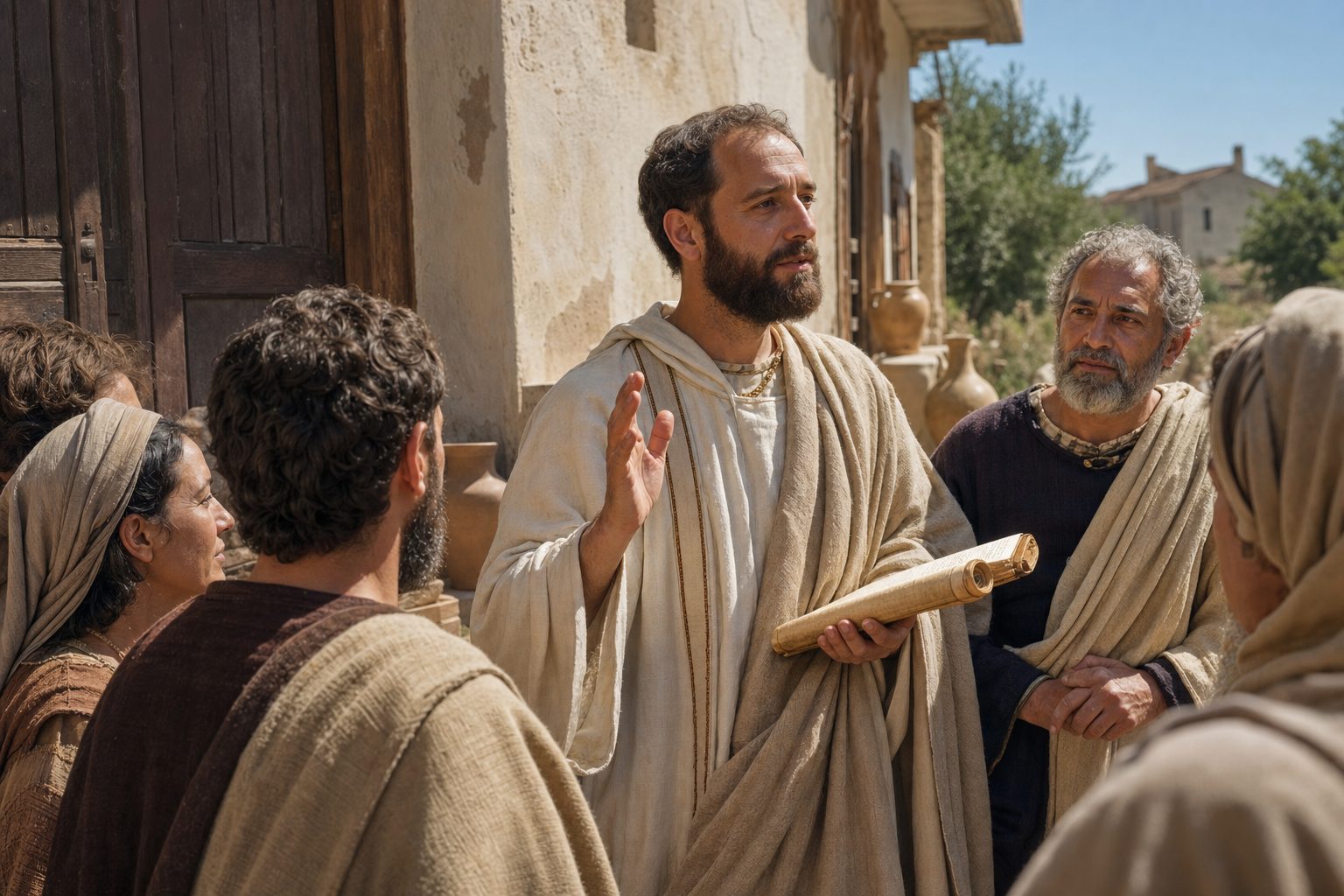
To remember the victories of the glorious martyrs over the devil and his servants, and the sufferings of the martyrs of Christ, is to proclaim the glory of Christ our God, and to preach His power, manifested in the good deeds of the martyrs who suffered for the glory of His holy name.
The holy martyrs who suffer after him, being members of his body (1 Cor. 12:27), fill, in the apostle's words, "the lack of the sufferings of Christ" (Col. 1:24) in their flesh, and since they, fighting for his most holy name, die unconquered, in them Christ is a victor, because in them he suffers as in his body, in them he shows his victory over the body and, being glorified, he glorifies with himself his members, for
Those who suffered as he did, that is, the holy martyrs, are as close to him in glory as they were to his sufferings.
Therefore, it is fitting for us to praise and please the good soldiers of Christ, whose teachings and example of courageous deeds make the Church of Christ shine throughout the universe; while they themselves are under the altar, clothed in white robes, stained with their own blood, and Christ-believers rest in bliss (compare Matthew 5:14).
The face of the martyr was that of St. Lucian, who, as soon as the divine grace washed him in the bath of baptism, was seen to be great and glorious among men. His parents in the flesh named him Lucius, after the great proconsul Lucius, whose lineage he led.
He was called Lucius by his parents, that is, brilliant, with the multiplication of God's gifts in him, he acquired a perfect name, calling himself Lucian, which means light-bearer. This was an indication that in the light of the new grace he would be a light to the world about the Lord (Matthew 5:14).
He was skilful in wisdom, learned the Greek and Roman languages, but he acquired perfect wisdom from the teaching of the Apostle Peter, for he clung to him, became his disciple, and was imbued with heavenly wisdom.
Lucian had already reached perfection in God's wisdom when, guided by God, Saint Dionysius the Areopagite (a member of the Areopagus - the highest governmental place in Athens) came to Rome, converted to Christianity under the influence of the preaching of Apostle Paul (Acts 17:34) and was ordained by the same to the bishop of Athens; then in 90 he was sent to Gaul to preach the Gospel together with the presbyter Rusticus and the deacon Elephoferus.
He suffered with them in 96 under Domitian. His memory is dated 3 October.] , wishing to visit the holy prisoners, the Apostles Peter and Paul, but no longer found them alive.
And Dionysius stayed with him a long time, and they comforted one another, and talked, and strengthened one another, not only with words, but also with examples of virtue.
"Dearest brother, Dionysius, you see how much the Lord's harvest is in the Gentiles, and how few are obedient to the word of God.
St. Dionysius agreed to this wholeheartedly, and then blessed Clement began to seek and gather for him friends, helpers and fellow-servants, pious and prudent, shining with holy life.
And when he had finished, blessed Clement, with greeting words, strengthened the chosen, saying, Go, beloved brethren, go, invincible soldiers of Christ, and as the Lord was with our holy apostles and their companions, so may he be with you, bearers of his holy name, that ye may gain a people out of the Gentiles unto the Lord, and bring them into his fold.
After a long talk, St. Clement said goodbye to them and sent them on their way in peace. They traveled together and first preached the good news of Christ throughout Italy.
As they approached the city of Ticinus [Ticinus, present-day Pavia, an ancient city in Cisalpine Gaul, on the left bank of the Tinus, near its mouth at Padus], blessed Lucian, in a place called Parma, preached the word of God to the people and turned them away from their vain idolatry.
The local inhabitants, unbelievers and overzealous idolaters, unable to bear the offence inflicted on their gods, and unwilling to heed the gospel of God's word, did not hesitate to seize St. Lucian and, having inflicted many insults on him, threw him alone into the public prison.
(Ps. 85:11) and "Make my steps firm in your paths, that my feet may not slip". (Ps. 16:5) Thus rejoicing in the Lord, the holy man was in prison as under the wings of God and, with full hope of protection, prayed to Him: "Bring my soul out of prison, that I may bless your name".
(Romans 8:28) These and similar prayers were offered by the saint with all his heart, and his prayer was heard from heaven, for he asked not to be left on the road without his companions, with whom he wanted to go to suffering and reach where he was sent.
This is not what a valiant soldier of Christ prayed for because he was afraid to die for his Lord, but because he wanted first to multiply the Lord's spiritual fruitage and then, having gathered a bountiful and prosperous harvest, to receive with his companions the martyr's crown and reward for his labors.
And soon he received divine help: some Christians, learning of the fate of the holy man, came at night to the prison, moved by love for Christ, and in whatever way they could, they freed Lucian from his fetters and allowed him to leave with his holy friends.
(Isa. 52:7; Rom. 10:15) The apostle Paul wrote: "The good news of the good news is good news of good things, good news of peace".
It is impossible to describe how many thousands of people they converted to Christ in a short time, proclaiming to all the word of salvation; and so rapid was the power of God in them that those who looked at them thought they were looking at heavenly citizenship, for signs and wonders shone among them all, enlightening the souls of God's chosen ones.
When they landed at the port of Ararat, they were warmly welcomed by the people. There they rested and, following the example of the holy apostles, began to look for places where they could preach the word of God.
In order to spread the Gospel of Christ and multiply the Church of God among the Gentiles everywhere, even to the British Ocean, St. Mareklin with a small number of brothers went to Spain, the blessed Saturninus to Gaul, and St. Dionysius with the blessed Lucian and others came to the limits of Paris.
And he was filled with the grace of the Holy Ghost, and preached the name of the Lord, and prevailed against the power of the enemy, and founded the church of Christ, and taught the people to be saved, not only by the example of virtue, but also by the word, and was given power of God to do miracles, and to heal all manner of diseases and infirmities among the people; and he had power over devils, that they, when they heard his commandment, immediately left those who were tormented by them.
Day and night, unceasingly preaching about Christ, Lucian was in prayer and vigilance, in daily fasting, in abstinence and complete mortification of the flesh, and so exhausted himself continually, until, in the apostle's words, he "presented his body a living sacrifice, holy and acceptable to God". (compare Romans 12:1.)
Blessed is he who longed for the crown of martyrdom, who seemed to have died for the world, and who bore his cross, this true follower of the Lord Jesus Christ, who knew that there were two kinds of torment, one secret and the other open, and who, before taking up the gallantry of open martyrdom and being crowned with the incorruptible crown of the Lord, wearied himself in secret, though his abstinence was known to all.
He was tried in the flesh by death, and was adorned with patience, and was made perfect in virtue by the exceeding lowliness and meekness of his countenance, so that in the spirit he was as it were with the angels in heaven, when he was in the flesh; wherefore his countenance was always seen as bright and agreeable, and his mind as peaceable, and the whole appearance of this old man, adorned with the exceeding gray, was like that of an earthly angel, a heavenly man.
When the fame of Lucian spread throughout Belgium, people began to come to him, wanting to be baptized, and were baptized by him in the name of the Father and of the Son and of the Holy Spirit, then breaking down the idols that he had previously worshipped.
And the ancient enemy, the devil, seeing the reproach of those whom Christ drew to himself by his servants, turned all his wiles and cunning to the destruction of the holy Church of God; and he stirred up wrath and hatred against the Christians in Domitian, who after Nero, who was then dead, set up a second persecution against the Christians: he taught him to compel the Christians throughout the empire of Rome to sacrifice to the carved gods, and to beat the strong in ropes after various sacrifices.
The pain.
And Domitian sent an evil decree into all the cities and villages of his kingdom, that all the rulers of the people, persuading the Christians to worship idols and to offer sacrifices to them, should slay those who would not obey them with various torments; and the persecutors of Christ's name were sent into Gaul to seek out the soldiers of Christ, and chiefly those who came from Rome, whose fame was already far spread; and they would destroy the name of Christ with them.
And they went through the cities and villages of Galilee, and found none; and the word came unto them that Lucian, the man of God, was preaching the gospel of the everlasting kingdom, and was enlightening the people of Belgium.
And when the martyrs heard this, they went to Belgium in great fury and wrath. And when St. Lucian had known before they came that the coming of the martyrs was at hand, by the revelation of the Holy Ghost, he remained in the place, and taught the people the words of life, and with him a great multitude that had been converted to Christ by his preaching. And in the hope of eternal glory and blessed reward, he exhorted them with all his heart, saying,
Therefore, my brothers, stand firm and steadfast in the faith, dear friends. I long to be with you as you are with us. So then, in the grace of God, stand firm.
Do not be swayed by fear, by threats, by insults, by all kinds of evil.
And when Lucian had said these things, he lifted up his eyes to heaven, and gave thanks to God before them all, that he had made him like unto the saints, and had not separated him from his friends, and said, I thank thee, Lord Jesus Christ, the Son of the living God, who hath made me a companion of the blessed Dionysius, and of his companions in death, and a fellow worker with them.
Having said this, he left the town of Bellovac [now Beauvais, France], not because he feared punishment, but because he wanted, in obedience to the Lord's command to avoid persecutors (Matthew 10:23), to set an example for his flock.
Walking with his blessed companions, the presbyter Maxian and the deacon Julian, he kept up a heart-warming conversation and prayed all along the way; finally he reached the top of the mountain he was going to, which is near the river called the Faramy, which flows from the west at a distance of three furlongs [about 690 yards] from the city.
When he came there, it was as if a city on a hill could not be hidden (Matthew 5:14); for even that mountain, which was so majestically raised above the river, was visible from afar.
When they heard that he was teaching the people near the city, they rode on horses, and came to the hill where the man of God was, with the people and his disciples. First they took the holy servants of God, Maxyanus and Julianus, to frighten St. Lucian by their torture and death, and to lead them to the worship of idols.
But the martyrs answered boldly, saying, We will never serve idols, for they are vanities, made with hands; but we have known the only true Lord, the Son of the living God, Jesus Christ, for whose name we are ready to die.
And when the wicked heard this, they killed them with the sword before the eyes of St. Lucian; and the saints received the crowns which the Lord had promised them, and put them on the faces of the holy martyrs. And St. Lucian, rejoicing and praising God for their deed, said before them all, I rejoice and rejoice in thee, O Lord my God, seeing my children that preceded me receive the crown of thy glory.
"Do you by your sorcery persuade the people to break the decree of the mighty Caesar and the Roman Senate, and to offer sacrifices acceptable to the immortal gods?" Blessed Lucian said, "I am not a sorcerer, but a servant of Jesus Christ, taught not by sorcery, but by divine wisdom, by the power of which I show men the way of God, and teach them how they may follow my Lord Jesus Christ without hindrance.
He is the One who came down to redeem mankind with His blood, and to save those who are brought out from darkness into light, and to make them submit to Him who is pleased to be crucified and to die for them.
"How can you confess Him to be God, who is not only dead but crucified?"
"Though you are unfit to hear the mysteries of the heavenly King because of your unbelief, yet for the sake of the multitude of the faithful I will tell you briefly: the true God, the Son of the true God, eternal and ever with the Father, at the end of the ages, desiring to renew the human race, which perished by the crime of Adam, chose to be born incorruptible and unspeakable from the Most Precious Virgin, to be true God and true man, in one person of two natures, One.
Christ, the true Son of God and Man.
And he, being passionless according to the Godhead, and always being with the Father, not only became visible, but also subjected himself, according to the nature of man, to sufferings for us: for he became obedient to God the Father even unto death, even the death of the cross, for our redemption. (Compare Phil. 2:8) If the Son of God had not been willing to be the Son of man, and had not put on the likeness of a mortal, then no human race would have received forgiveness from God, nor would the mortal have put on immortality.
These and many other words of the blessed Lucian filled the tormentors with even greater fury, and they said:
Thou art grown old, and it is time for thee to give up childish revelry; therefore thou hast dared to go without hesitation to death, and thou fearest not that great vanity shall seduce thee, and that much talk shall take away thy mind. Truly I say unto thee, if thou repent not at once, and forsake not thy folly and insolence, and offer not a sacrifice acceptable to the immortal gods, thy old age shall immediately be delivered unto the fierce torment without mercy.
They had him sit down and questioned him. "What is your name and where were you born? " he asked.
I am a Roman citizen by birth, but I do not boast that I am a Roman citizen, but that I am a slave of my Lord Jesus Christ, as you can see clearly in me. For me there is nothing else to live and glory in but my Lord Jesus Christ, and to die for Him is gain.
And they said unto him, We know not that thou art a sorcerer, and that thou makest the world to stumble, and that thou speakest proudly, and spareest not thine age.
"In the grace of Christ I was baptized and came to know the true God. "Not only have I renounced my faith in Satan and his idols, but also all his works.
But you are blinded by your unbelief, both Caesar and his Senate, and you are commanded to worship demons, idols made by human hands.
Latrin, Arius, and Antor, no longer able to endure the shame of their gods and of the emperor, laid their hands on the saint, bound him, and betrayed him to the soldiers, who, having stretched out the martyr, beat him for a long time without mercy with cruel whips.
And he was not changed, and his face and his mind did not cease to confess the name of Christ with a loud voice, saying, "I will never cease to glorify Christ the Son of God with my heart, my faith and my mouth".
And when the holy body lay beheaded and still moved, all were witnesses, and the murderers themselves, that a great light shone from heaven upon him, and a voice was heard from above with the light:
"Rejoice, good servant Lucian, who did not fear to shed his blood for me. Come and receive the crown promised to you, and be seated in heaven with the saints, and come and inherit the eternal glory prepared for you with the angels.
And a great fear fell upon all the people, and on them that heard it.
Others fled from it, others were amazed to see themselves freed from the snares of the devils: however, not being able to look at the brightness of the manifested light, they retreated from that place for a while.
Then St. Lucian, though dead in body, miraculously received from God the power of movement, rose as alive from the ground and stood upon his feet; then, taking his most holy head in his hands, he went unhindered, guided by the grace of the Holy Spirit who dwelt in him and by the help of the Angels, and with firm steps as a living flesh began the journey, carrying his holy head, as did his friend, St. Dionysius in the city of Paris.
And when he had gone about three distances, and had passed over the waters of the river Pharah, he came to the place of his sepulchre, which the man of God had chosen for himself, and lay there on the ground, and rested there in peace.
And God-fearing men, who had been converted to Christ by the preaching of his martyrdom, came and anointed his holy body with perfumes, and clothed him with clean linen, and buried him with great honour, not without the presence of angels.
"Thanks be to you, Lord Jesus Christ, "for you have given us such a fragrant scent.
And when they had said these things, the fragrance of God came upon them, and the presence of the holy angels was evident, who were with him from the time of his suffering until the time of his death and burial.
"We believe, Jesus Christ, that you are the true Son of God, reigning in heaven with the Father and the Holy Spirit, as we have heard with our ears and learned to believe with our hearts from your holy martyr Lucian.
And a great multitude of them that were gathered from the cities and villages that were round about saw it, and were comforted, and believed in our Lord Jesus Christ the Son of God in the same day, about five hundred souls.
together with the Holy Spirit, in the Trinity of the one true God.
Then some of those who had been converted diligently built a church over the tomb of the martyr, to the glory of God and in honour of his good pleasure, St. Lucius. The bodies of the holy martyrs Maximus and Julian were buried on the mountain where they were killed, but later, when the number of Christians increased, they were carried from there and laid with the body of the blessed Lucius.
As they have one faith, one love, one confession in affliction, so we believe, and in eternal bliss, they are cohabitants and heirs of an eternal kingdom.
We give thanks to our Creator that three of his witnesses, confessing the Trinity, have been perfected by martyrdom; and we venerate them, knowing that by them the blind receive sight, the lame walk, the demons are freed, and many are healed of all manner of diseases, by their holy prayers, by the grace of our Lord Jesus Christ, to whom be honor and glory with the Father and the Holy Spirit forever, amen.
On the same day the relics of the holy prince Dmitry Tsarevich of Moscow and all Russia miracle worker were transferred from Uglich to Moscow in 1606.