The holy martyrs Photius and Anictus.
In Nicomedia, a city in the province of Viennese [Little Asia], the wicked king Diocletian (284-305) began open persecution of Christians; by his order, instruments of torture were placed in the city: swords, scythes, horns, iron nails, pans, wheels, kettles, and other inhuman inventions of this kind; animals were also prepared; Diocletian wanted to frighten those who called on Christ's name.
And he sent to all parts of the empire terrible decrees, that they should persecute and kill them, and that they should blaspheme the only begotten Son of God.
And when he was filled with zeal for God, he went to the king, and fearlessly confessed the Lord Jesus Christ, the true Son of God. And St. Annicetus spoke eloquently to the king of the untimely birth of the Son of God, and of His incarnation, after the completion of years, for our salvation. And at the same time he rebuked the error of the idolaters, calling the gods of the heathen deaf and senseless; and at last he addressed the king with these words:
Your torments, O king, prepared for and announced to the Christians, do not frighten us at all: for us the torments are nothing, and we will never worship inanimate idols. The king, full of anger and fury, was unable to hear the divinely inspired preaching of St. Annikita and immediately ordered him to have his tongue cut off, but he spoke clearly afterwards, glorifying Christ God; then his veins were so violent and so long that his bones were bare.
But St. Onikitus, who was not himself, but someone else who was being persecuted, courageously endured suffering and loudly preached to the people who looked at him that Christ is the only true God.
Then the king gave orders to give St. Annicetus to be eaten by the beasts, and a huge lion was released, which, approaching the martyr with a terrible roar, suddenly became more humble than a lamb: he fondled the saint and the sweat that came from the torment on his forehead and cheeks, became like a lip, a paw.
I thank Thee, Lord Jesus Christ, that Thou hast delivered me from the teeth of this beast. I beseech Thee, Lord, and in the event that I am about to undergo, stretch out Thy right hand to help Thy servant, that I may overcome the wrath of the tormentor and be worthy of Thy martyr's crown.
When Diocletian saw this, he ordered that St. Anicetus be tied to a wheel among the sharp iron rods, set on fire, and the wheel be turned: he wished that the holy martyr should die cut in pieces by iron and burned by fire.
But St. Anicetus, chained to the wheel, prayed thus: "Lord Jesus Christ, for the sake of those who are to come, release me from the torments, that those who look at me, seeing your quick help, may stand courageously against the tormentor and receive from you the martyr's crown.
And at once the bands of St. Anicetus were loosed, and the wheel stopped, and the fire was extinguished. Then the tormentor commanded to fill a cauldron with tin, to melt the last, and to cast the holy martyr into it.
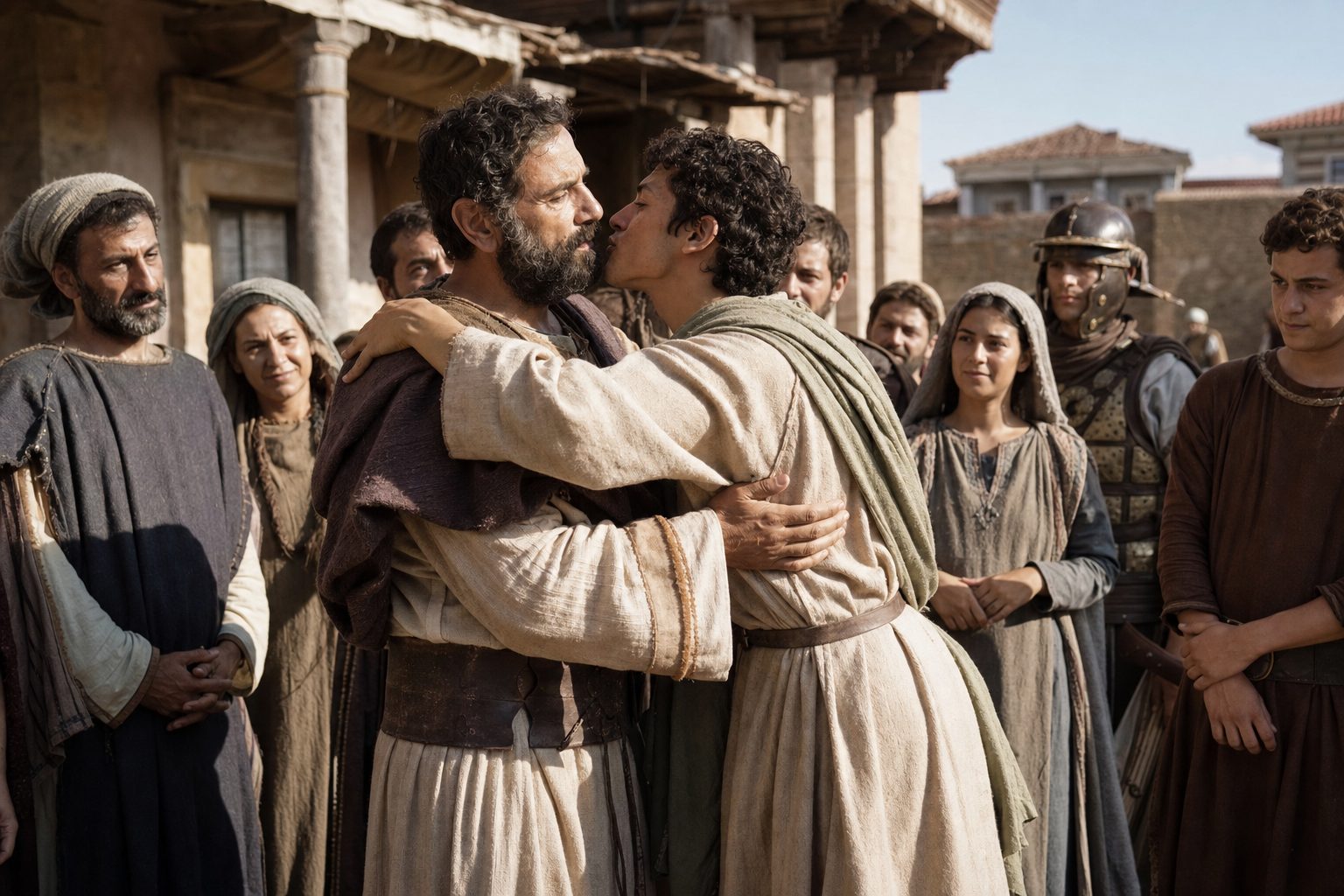
When Photius, a relative of St. Aniquitus, saw the courage and strength of Christ in his servant, he put away all fear. He went out from the crowd to the place of execution and embraced and kissed the holy martyr, calling him his father and intercessor for his salvation. By this act Photius clearly showed that he was willing to suffer any suffering for Christ's sake.
Then Diocletian in anger cried out to the soldiers, "Kill him with the sword!" But when one of the soldiers lifted up his naked sword to strike the martyr, by the power of God, his hands turned on himself, so that he struck himself on his knees and fell to the ground and died.
If you obey me and sacrifice to the gods, I will honor you and make you rich. "Your honor and your wealth", said the saints, "may be with you in your destruction". In a rage the tormentor ordered them to be hanged first, their bodies bound with iron nails, their wounds burned in the fire, and then stoned.
But in all these afflictions the saints rejoiced, and gave glory to God, because they suffered no affliction, and the Lord kept them safe for the glory of his holy name. And they were bound by the feet of wild horses that dragged them.
But even so Diocletian's torture was of no avail: the Lord again preserved them from harm, and the holy martyrs, being dragged, as if in a chariot, praised the invincible power of the Lord, and strengthened one another; and the wild horses suddenly ceased; the feet of the saints were loosed from their fetters, and they stood up perfectly healthy.
And when they had been cast into the prison, and had spent three years there, the saints were brought forth to be tormented again. And Diocletian's commandment was, that they should burn the public baths of stone three days, and that they should shut up the holy martyrs. But the saints, Anicetus and Photius, prayed to God, and the baths were loosed, and the key of the water, which brought them coolness, was shut.
And it came to pass on the third day, when the watchmen opened the bath, that they saw the saints walking in it, praising God, and they were not hurt. And it was told the king, and he went to see for himself, as if he had not believed the news. And the saints said to the king, Behold, we, the tormentor, have prevailed in all our afflictions, and thou art conquered and ashamed.
The king returned home in shame, and ordered the martyrs to be taken and kept in chains until he could find a way to destroy them. On his orders, a huge furnace was made, fortified on four iron pillars; it could accommodate many people.
When the time had come to throw them into the fiery furnace, they stood up with their wives and children and cried out,
We thank you, Father God Almighty, that through faith in your only-begotten Son, our Lord Jesus Christ, you have brought us together for the martyrdom crown. We pray to you, merciful God, to stretch out your hand from the heights and receive our souls into the eternal peace that you have prepared for your confessors.
And when the servants had taken away the bodies of the saints, they saw that they were not hurt by the fire, even their hair was whole. And many of the Gentiles believed in Christ our God, to whom be glory, Father and Holy Spirit, for ever. Amen.